
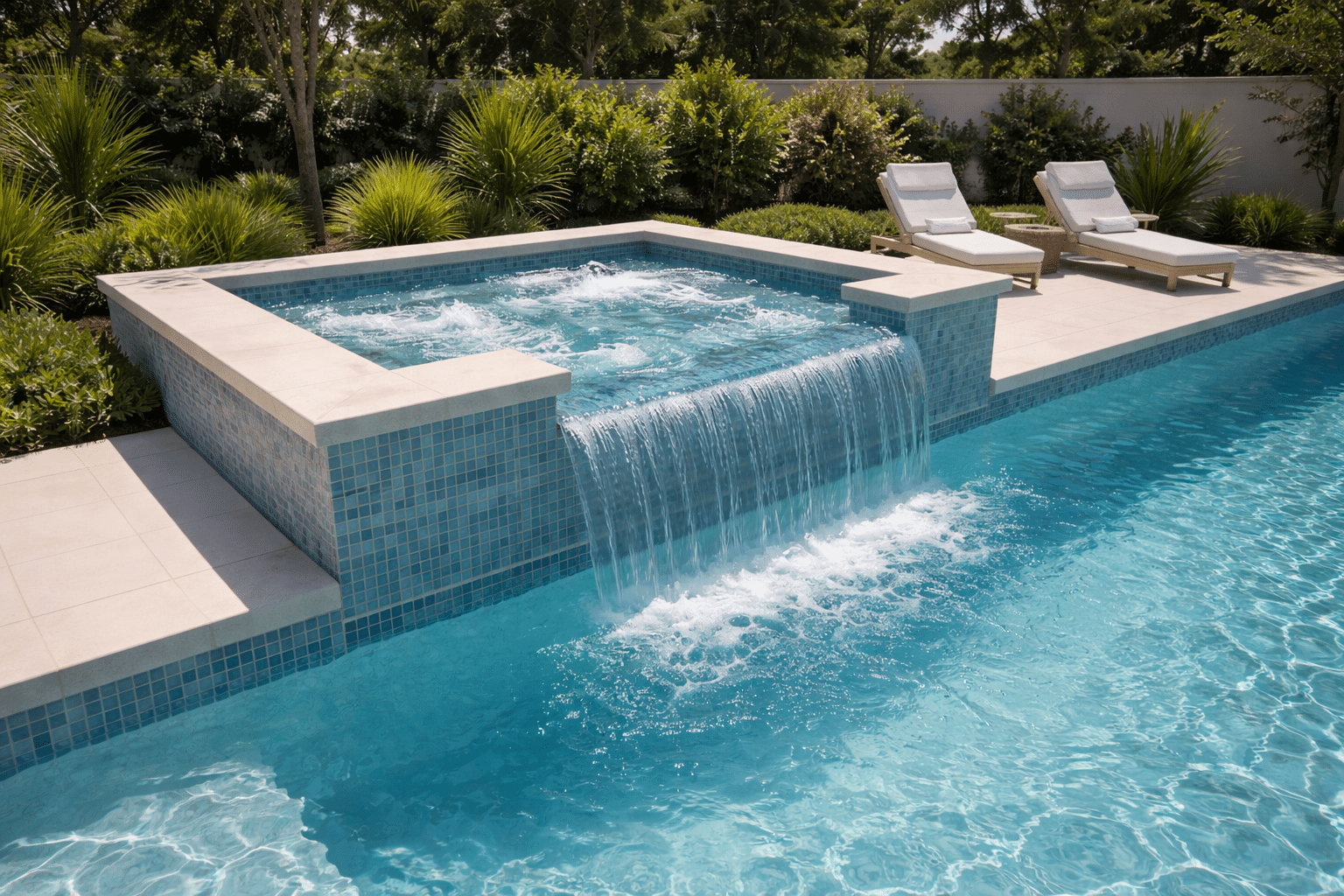
Adding a spa to an existing pool is one of the most popular remodeling upgrades homeowners consider. A well-designed spa can extend usability, improve comfort, and transform how the pool is used year-round.
However, adding a spa to an existing pool is not a cosmetic add-on. It is a structural and mechanical project that requires careful planning, evaluation, and proper execution to function correctly and safely.
Can You Add a Spa to an Existing Pool?
In many cases, yes — but not every pool is a perfect candidate.
Whether a spa can be added depends on several factors, including:
-
The existing pool’s construction type and layout
-
Available deck and yard space
-
Plumbing configuration and accessibility
-
Equipment capacity
-
Local code and permitting requirements
A site evaluation is essential to determine feasibility and design options before moving forward.
Types of Spas That Can Be Added During a Remodel
Integrated Spas
An integrated spa is connected to the pool and typically shares the same circulation system. These spas are often raised with spillover into the pool or built level with the waterline.
Integrated spas require:
-
Structural tie-in to the existing shell
-
Dedicated plumbing for jets and returns
-
Proper valve and automation configuration
Standalone Spas
A standalone spa is built near the pool but operates independently. These are often chosen when structural integration isn’t feasible.
Standalone spas require:
-
Independent plumbing and equipment
-
Separate heating and control systems
-
Additional space and access considerations
Structural Work Involved
Adding a spa to an existing pool often involves:
-
Partial deck removal
-
Excavation and steel reinforcement
-
Concrete or shotcrete construction
-
Tile, coping, and interior finish work
Because this is structural work, engineering and permits are commonly required, and construction timelines vary based on scope and site conditions.
Plumbing, Heating, and Equipment Considerations
A spa remodel is as much a mechanical upgrade as it is a structural one.
Important considerations include:
-
Dedicated jet plumbing for proper pressure
-
Heater sizing to support spa temperatures
-
Automation upgrades for easy control
-
Pump capacity and flow balancing
In many cases, existing equipment must be upgraded to support the additional demands of a spa.
Design Options and Features
When adding a spa, homeowners often consider:
-
Raised vs. level spa designs
-
Spillover effects into the pool
-
Seating layouts and jet placement
-
Lighting and water features
Thoughtful design ensures the spa complements the existing pool rather than feeling like an afterthought.
Timeline and Disruption Expectations
Because a spa addition is a remodel, homeowners should expect:
-
Temporary deck and pool access disruption
-
Construction phases similar to a small build
-
Coordination between multiple trades
Timelines vary depending on design complexity, permitting, and material selections.
Setting the Right Expectations
Adding a spa to an existing pool can be an excellent upgrade, but it is not a quick or simple modification. Structural integration, plumbing, equipment, and code compliance all play a role in the final outcome.
Understanding the scope upfront helps ensure the finished spa performs properly and blends seamlessly with the existing pool.
Final Thoughts
A professionally designed and installed spa can significantly enhance an existing pool, providing comfort, functionality, and long-term value. With proper planning and execution, a spa remodel can feel like a natural extension of the original pool design.