
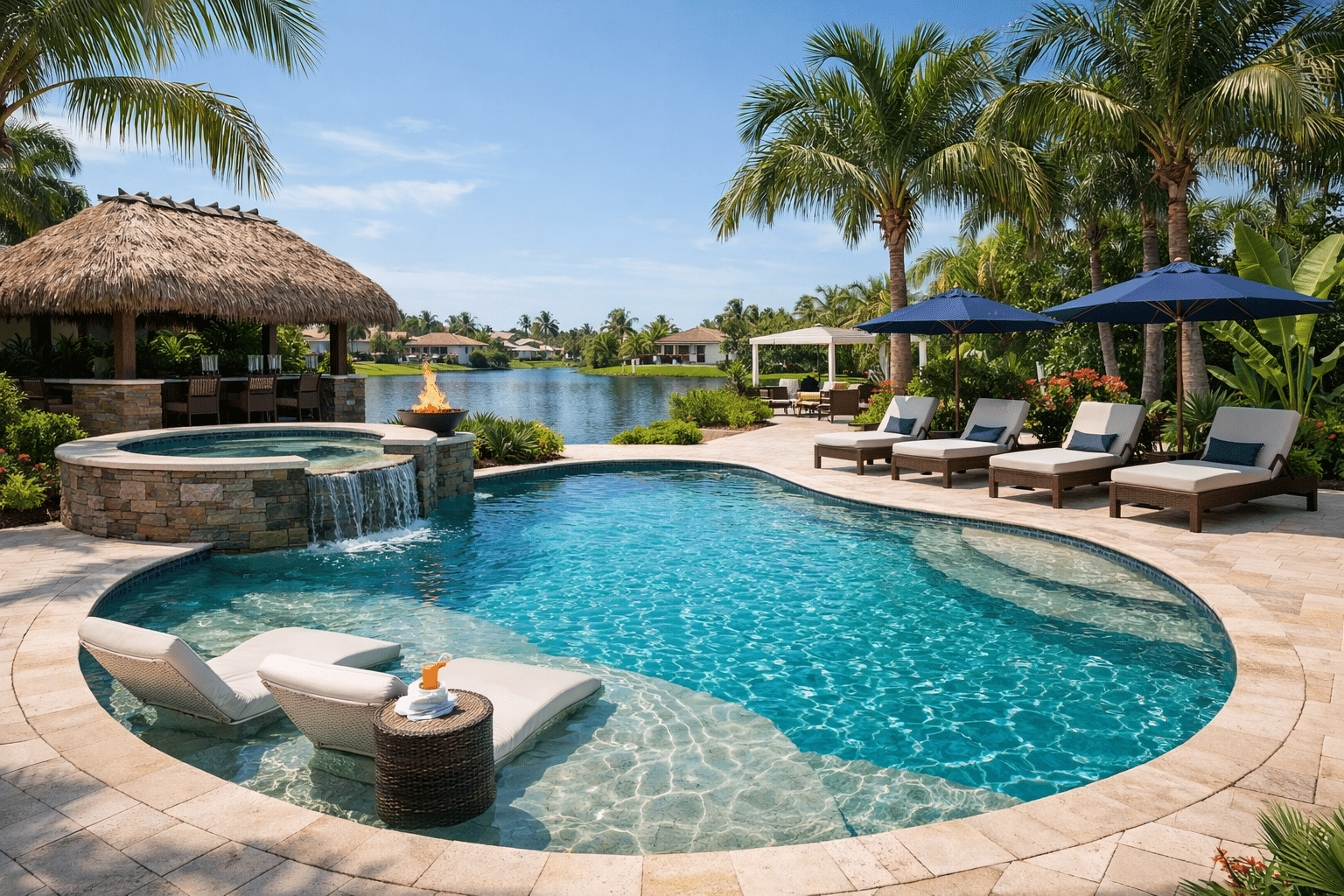
Choosing the right type of swimming pool is one of the most important decisions a homeowner makes during the planning process. Concrete, fiberglass, and vinyl liner pools each have advantages and limitations, and the “best” option depends on long-term goals, budget expectations, maintenance preferences, and design flexibility.
Understanding how these pool types differ helps homeowners make informed decisions and avoid surprises later.
Concrete Pools
Concrete pools (often referred to as gunite or shotcrete pools) are fully custom-built on-site. This construction method allows for complete design flexibility and long-term structural durability.
Key Characteristics
-
Built using steel reinforcement and shotcrete or gunite
-
Fully customizable in size, shape, depth, and features
-
Finished with plaster, pebble, or other interior surfaces
Advantages
-
Unlimited design flexibility
-
Ideal for custom features such as integrated spas, sun shelves, benches, and water features
-
Strong structural integrity when properly built
-
Can be renovated or updated over time
Considerations
-
Longer construction timeline
-
Higher upfront cost compared to other pool types
-
Interior finishes require periodic maintenance or resurfacing
Concrete pools are often chosen by homeowners who prioritize customization and long-term adaptability.
Fiberglass Pools
Fiberglass pools are manufactured off-site as a single molded shell and installed into an excavated area at the property.
Key Characteristics
-
Pre-manufactured shell delivered and set on-site
-
Smooth, non-porous surface
-
Limited to available shapes and sizes
Advantages
-
Faster installation timeline
-
Lower ongoing maintenance due to smooth surface
-
Resistant to algae buildup
-
Long-lasting shell when installed correctly
Considerations
-
Limited customization compared to concrete
-
Transportation and access restrictions can affect feasibility
-
Repairs, while uncommon, may require specialized service
Fiberglass pools are often selected by homeowners who value quicker installation and lower long-term maintenance.
Vinyl Liner Pools
Vinyl liner pools are built with a frame structure and finished with a custom-fitted vinyl liner.
Key Characteristics
-
Steel, polymer, or concrete wall panels
-
Vinyl liner installed as the interior surface
-
Typically rectangular or simple shapes
Advantages
-
Lower initial cost compared to concrete or fiberglass
-
Smooth surface
-
Shorter construction timeline
Considerations
-
Vinyl liners require replacement every several years
-
Less design flexibility for custom features
-
More susceptible to damage from sharp objects or pets
Vinyl liner pools are often chosen for affordability and simplicity.
Comparing the Three Pool Types
Design Flexibility
-
Concrete: Highest
-
Fiberglass: Limited
-
Vinyl Liner: Moderate
Construction Timeline
-
Concrete: Longest
-
Fiberglass: Shortest
-
Vinyl Liner: Moderate
Maintenance Requirements
-
Concrete: Highest
-
Fiberglass: Lowest
-
Vinyl Liner: Moderate
Long-Term Durability
-
Concrete: Excellent with proper maintenance
-
Fiberglass: Excellent shell longevity
-
Vinyl Liner: Dependent on liner replacement cycle
Choosing the Right Pool for Your Property
The right pool type depends on several factors, including:
-
Desired design and features
-
Budget and long-term maintenance expectations
-
Yard access and layout
-
Willingness to perform or manage routine upkeep
No single pool type is universally “better.” Each option serves different priorities and lifestyles.
Final Thoughts
Concrete, fiberglass, and vinyl liner pools each offer distinct benefits. Understanding their differences allows homeowners to align expectations with reality and choose a pool that fits their needs long-term.
A well-informed decision at the beginning of the process leads to fewer surprises and a more satisfying ownership experience.