
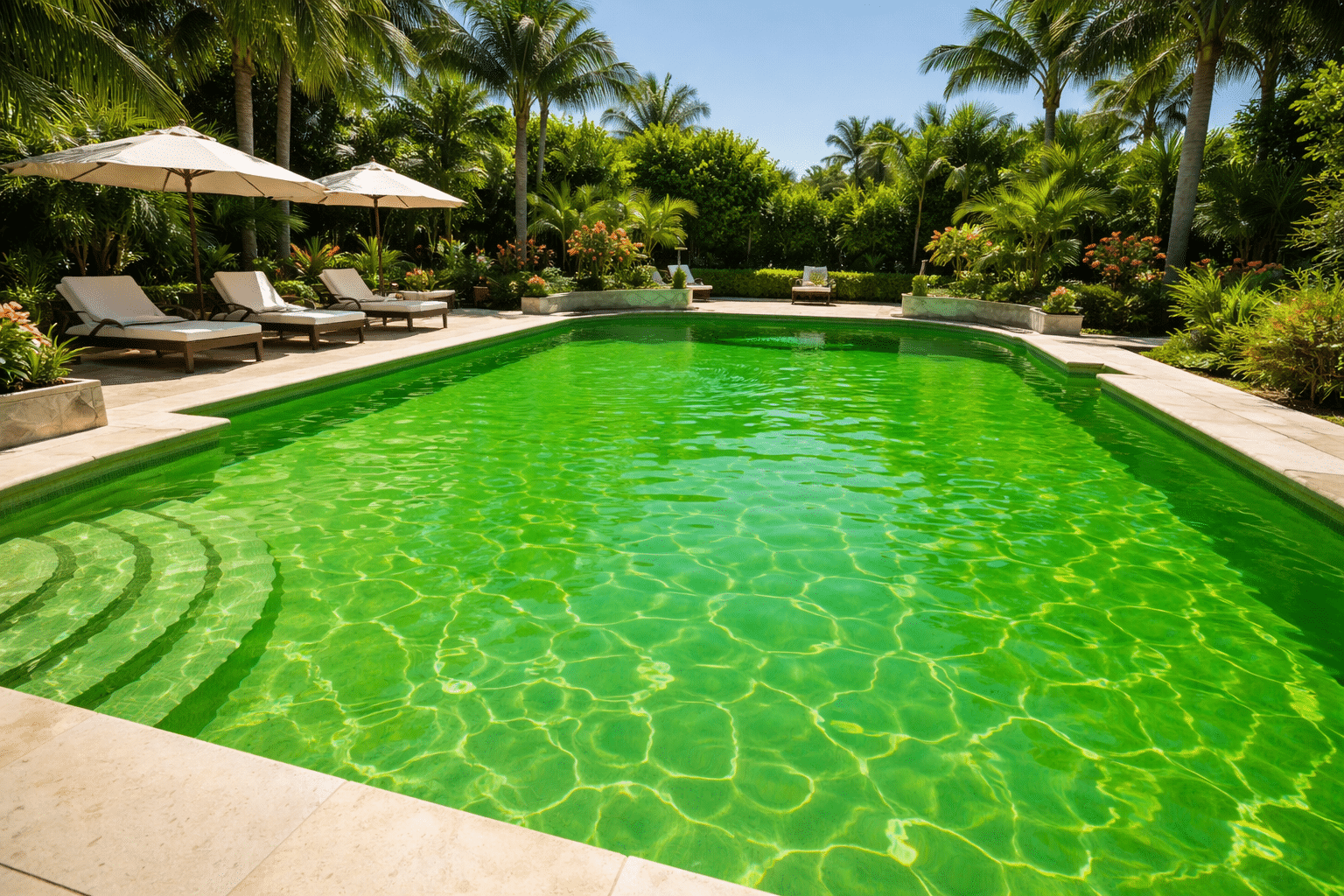
Yellow algae is one of the most frustrating pool problems homeowners encounter. It often appears suddenly, clings to surfaces, and can return even after treatment—leading many pool owners to assume their pool isn’t being maintained properly.
In reality, yellow algae behaves very differently from standard green algae, and understanding those differences is the key to dealing with it effectively.
What Is Yellow Algae?
Yellow algae (sometimes called mustard algae) is a chlorine-resistant form of algae that typically appears as yellow or light brown dust on pool walls, floors, and shaded areas. It often collects on steps, benches, behind ladders, and along surfaces with limited circulation.
Unlike green algae, yellow algae:
-
Is more resistant to normal chlorine levels
-
Can survive in shaded or low-flow areas
-
Easily reappears if not treated aggressively and correctly
Why Yellow Algae Is So Persistent
Yellow algae has a protective outer layer that allows it to survive even when chlorine levels are technically “within range.” This makes it harder to kill and easier to reintroduce.
Common reasons yellow algae keeps coming back include:
-
Inadequate brushing of affected surfaces
-
Contaminated pool accessories (toys, floats, brushes, vacuums)
-
Poor circulation in certain areas of the pool
-
Inconsistent chlorine exposure
-
Environmental factors like pollen, dust, or nearby landscaping
Even a single contaminated item placed back into the pool can reintroduce yellow algae.
Why Regular Chlorine Isn’t Always Enough
Many homeowners assume increasing chlorine alone will solve the problem. While chlorine is essential, yellow algae often requires higher-than-normal chlorine levels combined with physical removal.
Without thorough brushing and proper circulation, the algae can survive treatment and resettle once chlorine levels return to normal.
What an Effective Yellow Algae Treatment Involves
Successfully eliminating yellow algae usually requires a multi-step approach, not a single chemical application.
An effective treatment typically includes:
-
Aggressive brushing of all pool surfaces
-
Targeted chlorine elevation for a specific period
-
Cleaning or sanitizing all pool accessories
-
Filtering continuously to remove dead algae particles
-
Follow-up monitoring to prevent reoccurrence
In many cases, this process may take multiple visits or several days to fully resolve.
Why Yellow Algae Can Return Even After Treatment
Even when treatment is performed correctly, yellow algae can reappear due to:
-
Continued environmental exposure
-
Incomplete accessory sanitation
-
Shaded areas with limited circulation
-
Seasonal conditions that favor algae growth
This does not necessarily indicate a failure of service—it reflects the stubborn nature of yellow algae itself.
Preventing Yellow Algae Moving Forward
While yellow algae can’t always be permanently prevented, the risk can be reduced through:
-
Consistent brushing of steps, benches, and shaded areas
-
Maintaining stable chlorine levels
-
Proper filtration and circulation
-
Keeping pool accessories clean and out of the water when not in use
Regular maintenance helps minimize the conditions that allow yellow algae to thrive.
Managing Expectations Is Key
Yellow algae is not the same as a green pool, and it should not be treated with the same expectations. While it can be controlled and eliminated, it often requires extra time, effort, and follow-up compared to standard algae issues.
Understanding this upfront helps homeowners make informed decisions and reduces frustration during treatment.
Final Thoughts
Yellow algae is one of the more challenging pool water issues to address, but with the right approach, it can be managed effectively. Proper brushing, targeted treatment, and realistic expectations are critical to long-term success.
If yellow algae is suspected, addressing it early and thoroughly helps prevent repeated outbreaks and ongoing water quality problems.